
NYC Boiler & Closed Loop Water Treatment — Steam, Hydronic Heating & Chilled Water Systems

If your building has a steam boiler, a hot water heating system, a chilled water loop, or any other water-based HVAC system, water chemistry determines how long that equipment lasts and how much it costs to run. Scale on boiler heating surfaces wastes fuel. Corrosion in hydronic loops causes pipe failures, pump failures, and heat exchanger fouling. In New York City, where buildings are dense, inspections are mandatory, and violations are costly, a formal water treatment program is not optional — it is how you protect your equipment and stay on the right side of the NYC Department of Buildings.
Acqua Treat has been treating commercial boilers and HVAC water systems in New York City since 1982. We work with building owners, property managers, facilities engineers, and superintendents across all five boroughs.
Boiler Violations & Water-Side Inspection Deficiencies
The NYC Department of Buildings requires annual inspections of all boilers in commercial and residential buildings. When an inspection reveals physical problems with the boiler itself — rather than just a filing issue — those conditions are noted in the inspection report and can trigger a violation that must be corrected before it will clear. Many of the most common physical deficiencies found during NYC boiler inspections are water-side conditions: problems caused directly by inadequate water treatment.
Common water-side conditions flagged during NYC boiler inspections:
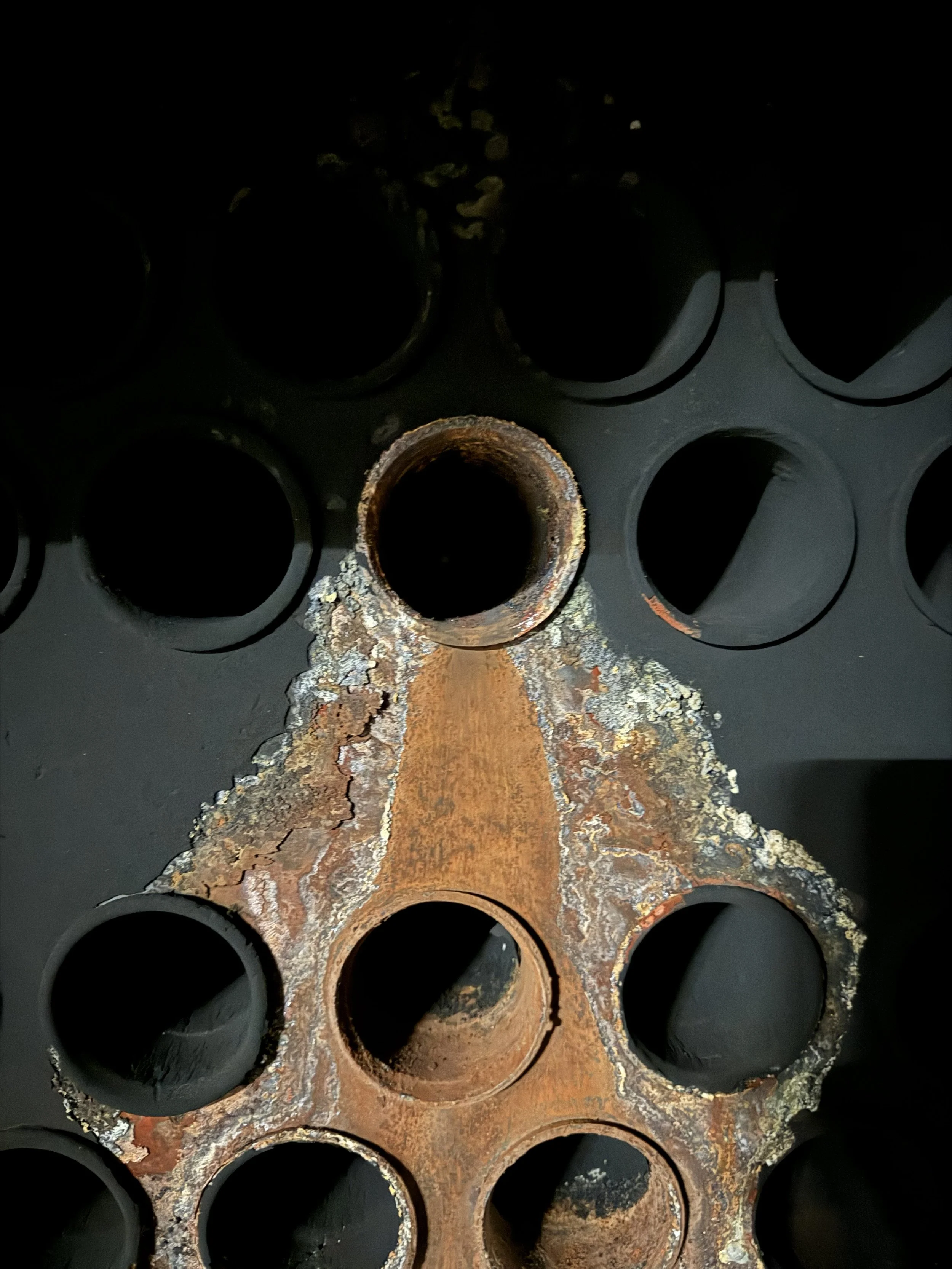
Scale deposits on heating surfaces — reduces heat transfer efficiency, forces the burner to work harder, and can lead to overheating and tube failure
Corrosion and pitting on boiler shell, tubes, or headers — caused by dissolved oxygen and low pH in untreated feedwater
Sludge accumulation in the boiler drum and mud legs — hardness salts precipitating out of untreated makeup water
Return line corrosion — condensate lines corroded from carbonic acid that forms when CO₂ dissolves in the condensate
Foaming and carryover — dissolved solids concentration too high, causing water to enter the steam lines
If your boiler inspection report notes any of these conditions, a corrective water treatment program is typically required as part of the resolution. Acqua Treat provides water-side assessments, treatment program implementation, and the written documentation to support your DOB compliance filings. Building owners and managers who have received boiler violation notices (issued as LBLVIO for steam boilers or HBLVIO for high-pressure boilers in DOB NOW: Safety) should contact us as soon as possible — unresolved violations accumulate monthly late fees and can block property sales, refinancing, and certificates of occupancy.
What Boiler Violations Cost
$1,000 per boiler per year base civil penalty for failure to file
$50 per month in late fees for unresolved violations
Open violations can block property sales, refinancing, and certificate of occupancy
Continued non-compliance can trigger further DOB enforcement action
If you have a flagged water-side condition or an open boiler violation, contact us. We will assess the system, put a corrective treatment program in place, and give you the written documentation you need.
Steam Boiler & Hot Water Boiler Water Treatment
New York City has more steam heating systems than any other city in the country. Pre-war and mid-century apartment buildings, commercial loft buildings, hospitals, schools, and government facilities across all five boroughs rely on steam boilers for heat — and treating the water correctly is what keeps them running efficiently and passing annual inspections.
Steam boilers and hot water heating boilers are particularly sensitive to water quality because they process large volumes of makeup water continuously through the heating season, concentrating impurities over time. The consequences of poor treatment accumulate gradually and invisibly — until a tube fails, an inspection flags scale or corrosion, or fuel bills climb without explanation.
What a Proper Boiler Water Treatment Program Addresses
Oxygen scavenging — removes dissolved oxygen from feedwater before it enters the boiler, preventing pitting corrosion on tube surfaces
pH and alkalinity control — maintains water chemistry in the range that inhibits both corrosion and scale
Sludge conditioning — keeps hardness precipitates in suspension so they can be removed through blowdown rather than adhering to heating surfaces
Blowdown management — controls dissolved and suspended solids by systematically removing concentrated boiler water
Condensate return line treatment — neutralizes carbonic acid in the condensate, protecting return mains and steam traps
Foam and carryover control — prevents high dissolved-solids from causing foaming that contaminates the steam supply
Hardness control — prevents calcium and magnesium from precipitating as scale on boiler heating surfaces; even 1/16" of scale measurably increases fuel consumption
Full Service vs. Supervisory Programs
Full Service: Our technicians visit on a scheduled basis to perform chemical treatment, water testing, system inspection, and blowdown management. We maintain all treatment records and provide written reports suitable for DOB inspection documentation.
Supervisory Service: We supply the chemicals, feed equipment, and training so that your in-house maintenance staff performs day-to-day treatment under our professional oversight. We perform regular water analysis and provide technical guidance. Well-suited for buildings with capable superintendents already involved in boiler maintenance.
Hydronic Heating & Cooling Closed Loop Treatment
Closed hydronic systems — hot water heating loops, chilled water systems, condenser water loops, and fan coil systems — share a common vulnerability: because water recirculates continuously in a sealed system, any corrosion, scale, or microbiological contamination that develops compounds over time without relief. The problems are invisible until they produce failures that are expensive to fix.
The most common issues we encounter in untreated or undertreated closed loops in NYC buildings:
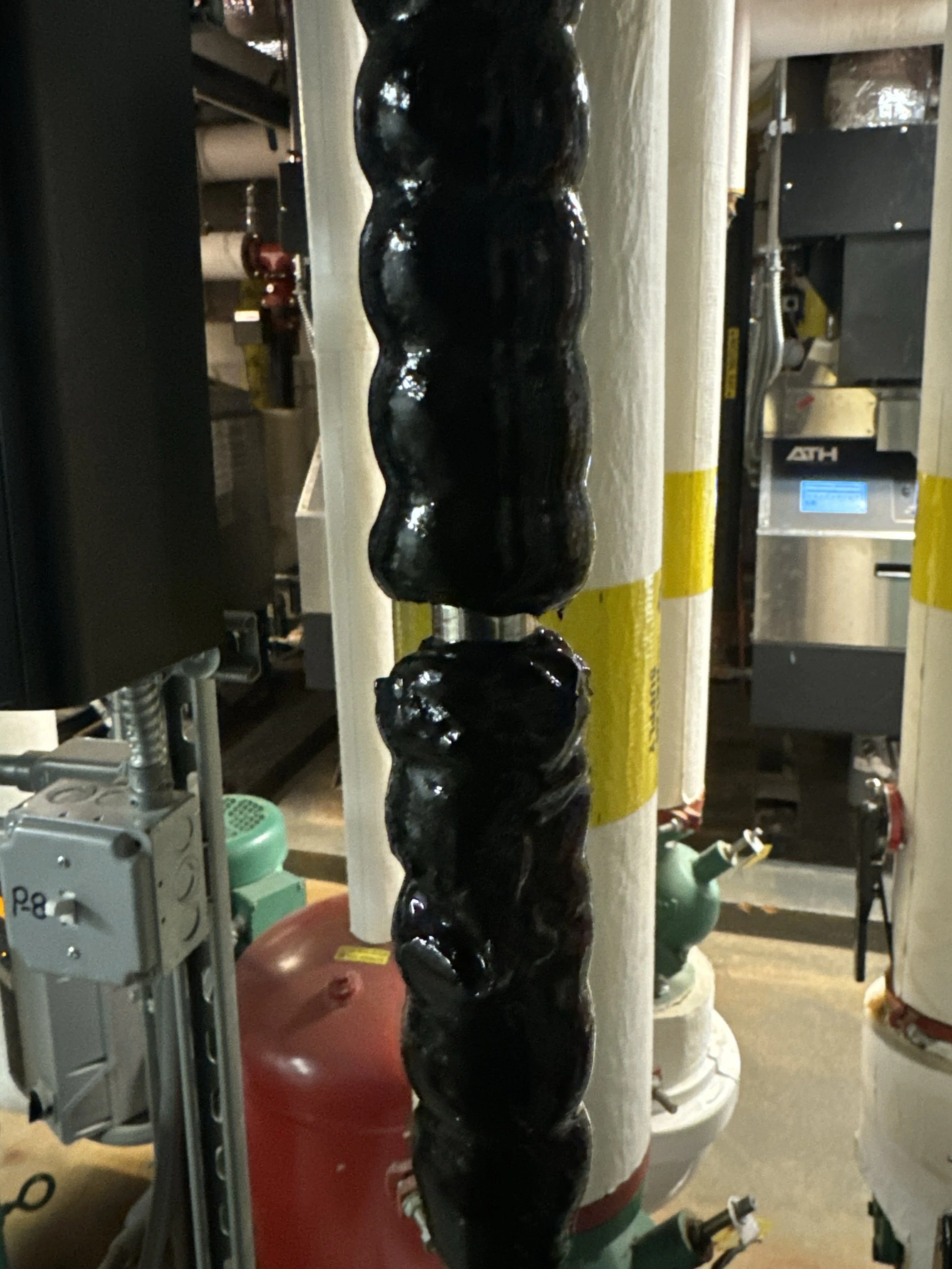
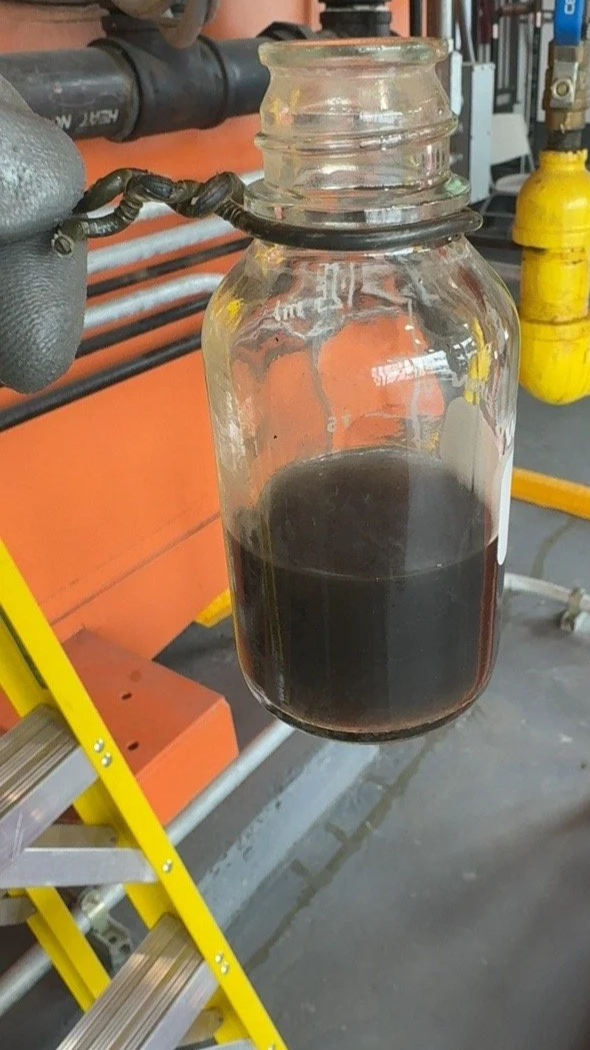
Excessive magnetite formation - shows up as black, thick, sediment-heavy water; wreaks havoc on coils and radiators systems and can cause pump seals to fail and leak.
Iron and copper corrosion — shows up as rusty or discolored water; left untreated, corrodes pipe walls, fittings, and heat exchanger
Scale and deposit fouling — reduces heat transfer and increases pump load, particularly in systems with high makeup water rates from leaks
Glycol degradation — in glycol-protected systems, uninhibited or degraded glycol turns acidic and actively corrodes system metals
Oxygen ingress — in systems without proper pressurization or air elimination, dissolved oxygen drives pitting throughout the loop
What Our Closed Loop Programs Include
Corrosion inhibitor programs matched to your system's metals — copper, carbon steel, cast iron, aluminum, or mixed-metal systems each require different inhibitor chemistry
Scale and deposit control for systems with makeup water hardness
Microbiological control to prevent biofilm and MIC
Glycol system maintenance — concentration testing, inhibitor reserve testing, and changeout coordination when fluid is degraded
System passivation for new construction, renovated systems, or systems returning from extended shutdown
Regular water analysis with written reports documenting treatment levels, corrosion indicators, and system trends
Chilled Water & Condenser Water Systems
Chilled water and condenser water systems operate in temperature ranges that promote microbiological growth, and condenser water systems are open to atmospheric oxygen and biological contamination. Where a system connects to a cooling tower loop, we coordinate the closed-loop treatment with the tower treatment program to ensure the two programs are chemically compatible.
Chemicals, Equipment & Cleaning
Proprietary and pre-formulated boiler treatment chemicals — oxygen scavengers, pH buffers, scale inhibitors, condensate treatment
Closed loop and chilled water treatment chemicals — corrosion inhibitors, biocides, deposit dispersants
FDA/USDA-approved formulations for healthcare, food processing, and pharmaceutical facilities
Chemical feed pumps and injection systems — supply and installation for continuous chemical feed programs
Boiler chemical cleaning — for removing oils and mills scale from newly constructed boilers, or descaling for boilers with significant existing scale deposits, performed prior to starting a new treatment program
Inhibited propylene glycol supply and installation for closed-loop freeze protection
If you have received a boiler violation, have a system that hasn't been formally treated, or simply want to understand what a water treatment program would cost and what it would include — contact us. We will give you a free, honest assessment. No obligation.